
When Your Child's Struggles Become Your Own
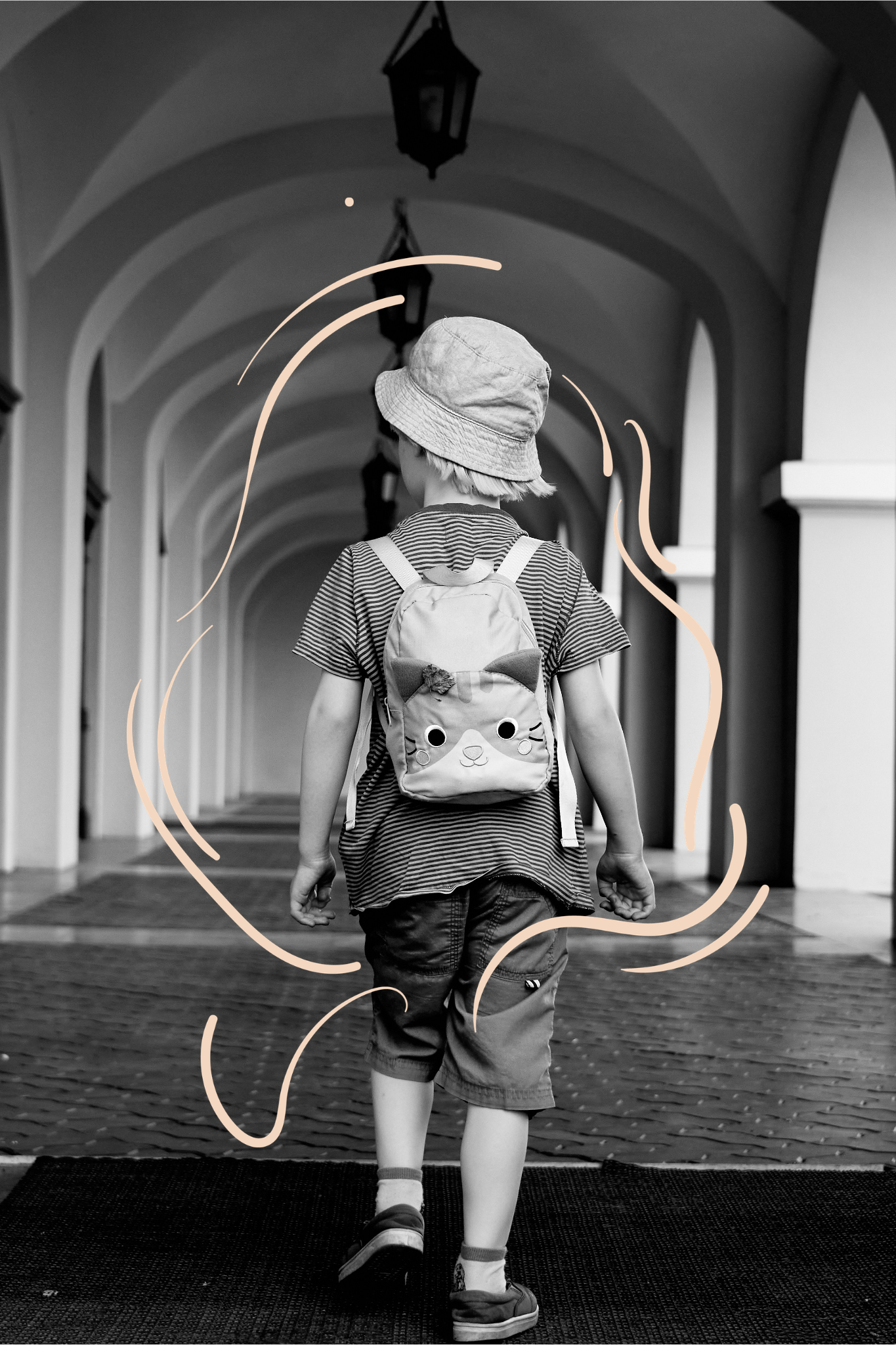
One of the hardest parts of motherhood is discovering how difficult it is to watch someone you love hurt. And as we roll into the new school year, this is a moment of transition for all mothers of school-aged children.
Before we become parents, we understand this in theory. Of course we know that our children will eventually be disappointed. They will lose games, argue with friends, struggle in school, feel left out, become embarrassed, fail at things they hoped they would do well, and one day experience heartbreak in ways we cannot yet imagine.
We know these things because they happened to us, but we still hope (even expect) that somehow our children will be spared. And don’t get me wrong, we don’t expect them to avoid every disappointment, we just want them to miss the ones that mattered most to us. Whether it was loneliness, anxiety, not fitting in or being fearful of not being enough.
Whatever hurt us most, we find ourselves hoping that somehow our children will move through those places more easily than we did.
That hope is born from love, but motherhood has a way of slowly teaching us that loving someone deeply does not protect them from experiencing being human fully. Unfortunately, they will struggle. And we need to remember that is not because we failed them. It is because struggle is part of every life.
For many mothers, however, their child’s pain doesn’t feel distinct from their own, many mothers feel like they are actually carrying their child’s pain too.
When Their Feelings Become Our Feelings
When we walk away from our child as they cry at preschool drop-off. What we don’t see, and they don’t see either is that their tears stop a few minutes after you leave. Yours, when you get back in the car, usually do not stop that quickly.
A teacher casually mentions that your daughter had a difficult morning. The comment lingers with you through lunch, through your afternoon meetings, and sometimes all the way until bedtime. As you wonder what is on their mind, what is challenging for them, and how can you stop them from feeling that challenge.
None of these reactions are unusual. Rather, they are deeply human because attachment changes us.
Our children's nervous systems begin to matter to us in ways that are difficult to explain until we have lived them ourselves. Their fear becomes almost physical inside our own bodies. Their disappointments can feel strangely personal. Even ordinary childhood struggles sometimes settle inside us as though they belong to us too.
We try and make ourselves feel better by saying we are simply worried. Sometimes we are, but other times the boundary between our child's emotional world and our own becomes harder to find.
Without intending to, we begin carrying feelings that were never entirely ours to hold.
The Questions Mothers Often Ask
Very few mothers say these thoughts out loud. And rarely is this talked about in mom groups or group chats that focus on eating, diapering, or where to send your kid to preschool to give them the best opportunity for the future.
Instead, these questions follow us through ordinary days.
If she is anxious, did I make her anxious?
If he cannot separate from me, have I somehow taught him to be afraid?
If she struggles socially, what did I miss?
If he melts down every afternoon, why can't I figure this out?
If my child is hurting, why can't I make it better?
These questions come from love, but they also come from responsibility. And maybe a responsibility to protect and care for our children, but we do not realize we have less control than we think.
Motherhood asks us to take responsibility for so many things that it can become difficult to recognize where our responsibility actually ends. We are responsible for teaching, guiding, repairing, apologizing, and protecting our children whenever we can. But somewhere along the way, many mothers start taking responsibility for something that has never belonged entirely to them, nor will they ever have control over.
Their children's emotional lives.
When Love Begins Looking Like Control
Sometimes it seems that mothers are looking to answer a question that has no answer. That is not realistic, and something we never would have expected from our own mothers or fathers. “How do I make sure my child never has to feel this?”
We don’t usually ask it directly, we usually show it through our behavior. Through our research, preparation, reading another parenting book, replaying conversations or times when we yelled as we fall asleep, searching for the perfect preschool.
We wonder whether we should have done things differently, and sometimes this curiosity is beautiful and leads to meaningful insight. But much of the time rather than being a moment of thoughtful loving parenting it becomes a place of judgement. We don’t believe we understand enough, or respond well enough, or see the most important things in life.
The feelings that spring up are held by the belief that perhaps we can prevent our children from hurting the way we once did. And this is both completely understandable and terribly impossible. Because children are not asking us to remove every painful feeling from their lives, rather they are asking us to witness their pain, to feel it not for them but with them, and to be there safe and present when they fall so they can get themselves back up.
The Child Who Finds the Places We Never Finished Healing
Another reason our children's struggles can feel so overwhelming is that they are usually not based in the present, they are based in the past.
The child who comes home without someone to play with may awaken memories of our own loneliness. Or the child who cries before every birthday party may bring us back to moments when we felt awkward, different, or left behind.
Children have a remarkable way of finding the places we never completely finished healing. Not on purpose, but because attachment and relationships always work this way.
The people we love most often lead us back to the parts of ourselves that still need healing.
For mothers with birth trauma, this can feel especially powerful. Birth may have been the first profound lesson that love could not prevent fear. No amount of preparation guarantees the birth you imagined. No amount of love guarantees the postpartum experience you hoped for.
Many mothers leave those early months feeling empowered by the false belief that although they could not protect their baby from that experience as they entered the world, they will protect them from everything they can from now on.
The promise sounds so meaningful, but it is also a promise we will break because life continues unfolding as children grow. And every stage of childhood asks them to encounter experiences we cannot have for them. Experiences filled with disappointment, fear, failure, loss, friendship, and heartbreak.
The question has never been whether our children will experience these things. The question is what they will discover about themselves while moving through them. And perhaps, just as importantly, what we will discover about ourselves while standing beside them.
The Difference Between Carrying and Accompanying
Perhaps one of the hardest transitions in motherhood is learning that loving our children does not always mean carrying what they carry.
In the beginning, the distinction is almost impossible to make. Our babies borrow our nervous systems before they are ever able to regulate their own. They depend on us to soothe them, feed them, comfort them, and help them return to a place of safety when the world feels overwhelming. Their survival quite literally depends on someone else's ability to stay close enough for them to borrow calm before they can create it themselves.
That is how attachment begins, in infancy, but children grow. Little by little, our role begins to change. They still need us and perhaps they always will. Yet what they need gradually becomes less about absorbing their feelings and more about helping them discover that difficult feelings can be survived.
There is an important difference between those two things.
One requires us to carry, while the other asks us to accompany. Accompanying empowers our children to grow into resilient individuals. Carrying, on the other hand, stalls that growth and heavily burdens the mother without teaching the child.
This feels like sitting beside a disappointed child without rushing to erase the disappointment or tell them that everything will be fine. It allows frustration to exist without immediately trying to solve it. It trusts that tears are not always emergencies and that anxiety, sadness, embarrassment, jealousy, and failure are not signs that something has gone terribly wrong.
Children do not develop resilience because difficult feelings never happen. They develop resilience because those feelings happen in the presence of someone who believes they can move through them and that is very different.
When We Become Afraid of Their Feelings
I sometimes wonder whether mothers become frightened less by our children's emotions than by what we believe those emotions mean.
A child who cries every morning before school can quickly become a story about lifelong anxiety. A difficult friendship begins to sound like a prediction of future loneliness. One disappointing soccer season somehow becomes evidence that our child will never feel confident.
Fear has a remarkable way of taking one ordinary childhood experience and stretching it across an entire lifetime. Our children, however, are almost never living inside that story. They are living inside today.
Children have an extraordinary capacity to move through emotions when the adults around them do not accidentally convince them those emotions are dangerous.
Sometimes the feeling that seemed unbearable at breakfast has disappeared by lunchtime. And other times they surprise us because they are not carrying yesterday in the way we still are.
Perhaps this is one of the hidden costs of anxiety in motherhood that we continue protecting our children from feelings they have already moved through.
Staying Instead of Saving
When our children hurt, almost every instinct inside us wants to make the hurting stop. We explain (usually over explain), reassure, negotiate, offer solutions before they have finished telling us the problem. And generally, we search for silver linings.
Sometimes we even become upset on their behalf before they have fully decided how upset they are themselves.
These responses come from love. But if you pause and consider how you would want to be treated in a moment of pain, loss, or sadness, you usually don't want to be saved, nor do you want someone else taking on your emotional weight. You simply want to feel seen and heard.
Our desire to fix shows us how uncomfortable suffering can feel inside our own bodies. Because children do not always need us to remove their feelings, they need us to help make those feelings less lonely. They need us to fully see them and their experience.
Think about this difference when your child is hurting. Instead of saying, "Don't worry. It'll be okay," try saying, "That really hurt." And then pause. Wait for your child to continue the story, to continue their feelings, or just to sit next to you feeling your silence and presence.
We want to teach our children not that they won’t experience pain, we want to teach them that they do not have to experience pain alone. And keep in mind, it is the relationship that children remember, not that perfect response or that moment in time.
This helps us also understand why repair matters so much in every relationship we have with our children. Not only because we are teaching them how to build relationships with others, we are also teaching them about our relationship with them. Their felt experience in those moments is the most important thing, not the exact words we say.
What Children Learn From Us
Children learn many things from the words we say, but we forget that they learn just as much from the way we live beside them.
When we panic every time they struggle, they may begin to believe struggle itself is frightening.
When we rush to remove disappointment, they may slowly learn that disappointment is something to fear instead of something to move through.
When we trust that they can survive difficult emotions, they begin borrowing that trust until it slowly becomes their own.
If you think about it, confidence does not begin when children stop feeling afraid. It begins when they discover they can feel afraid without becoming lost. Resilience is not built because someone prevented every difficult experience (or allowed every difficult experience to happen either). Rather it grows because someone remained nearby while they discovered they could survive one.
That is far more enduring than rescuing.
Standing Beside Them
There will come a day when your child experiences something you cannot prevent, and honestly, that day may have already arrived. What matters is being the parent who sits beside them, letting them know that you see their pain, that they don't have to carry it alone, and that they are entirely capable of moving through it while you stay by their side.
That kind of love does not remove suffering, but it transforms how suffering is experienced.
Because eventually our children begin speaking to themselves in the voices they borrowed from us. One day they will comfort themselves with the steadiness they first experienced in our presence. One day they will become that person to someone else, they will sit beside someone they love and offer the same patience they once received.
And perhaps, in those moments, they will remember, not that we always knew exactly what to do, or that we somehow protected them from every disappointment, but that we stayed.
Maybe that has been enough all along. Motherhood has never asked us to eliminate every painful feeling from our children's lives. It has asked us to love them deeply enough that they never have to face those feelings believing they are alone.
That is the work of raising emotionally healthy and resilient children. By becoming a safe place they can return to while they slowly discover that they are stronger than they ever imagined.
And as we learn to stand beside our children without carrying every feeling as our own, we discover that loving someone has never required becoming responsible for every part of their emotional life.
Love asks for presence and connection, even when life becomes painful.
Perhaps that is the lesson our children are teaching us all along. Not only how to raise them. But how to hold ourselves with the same compassion we have always tried to offer them.
And remember, always, you are strong as a mother.