


Birth Feelings Book a free 15-min consultation

ADHD Therapy for Women and Mothers

ADHD therapy may not be where your search began, but as you looked further into what you are experiencing you may have started to wonder. Do I have ADHD?

At Birth Feelings, ADHD therapy is designed specifically for women and mothers navigating the complex relationship between an ADHD mind and the demands of modern parenthood. Dr. Rebecca Branda, PsyD, works with adult women in Santa Monica and Los Angeles, and virtually throughout California, to help them understand how their brains work, identify the patterns that have shaped their lives, and build a relationship with themselves rooted in clarity rather than self-criticism.

You do not need a formal diagnosis to begin. If you recognize yourself in these patterns, this work may be for you.

Book a free 15-min consultation
A mother and her young daughter resting forehead to forehead on a beach
A mother holding her young daughter by the hand at the edge of the water

What ADHD Actually Looks Like in Women

ADHD in women rarely presents the way it does in textbooks. The hyperactive child who cannot sit still describes fewer than half of the women who actually live with this condition. Many spent decades being told they were fine, or anxious, or perfectionistic, before they or their providers connected the dots.

In women, ADHD can look like:

  • Feeling constantly behind, even when you are working harder than anyone around you
  • Losing things that matter to you: appointments, ideas, the thread of conversations
  • Overwhelm in response to tasks that appear simple to others
  • A cycle of procrastination, burnout, and self-criticism that repeats no matter how many systems you try
  • Emotional sensitivity and reactivity that arrives quickly and is hard to redirect
  • Hyperfocus on the things that interest you, while everyday maintenance tasks feel impossible
  • High external performance that masks internal struggle

For many women, ADHD has been misread as anxiety, depression, or just the exhaustion of trying to do everything. These experiences often coexist. ADHD is one of the most common comorbidities with anxiety and mood disorders in adult women. But they are not the same thing, and treating anxiety alone when ADHD is present often leaves the root dynamic unaddressed.
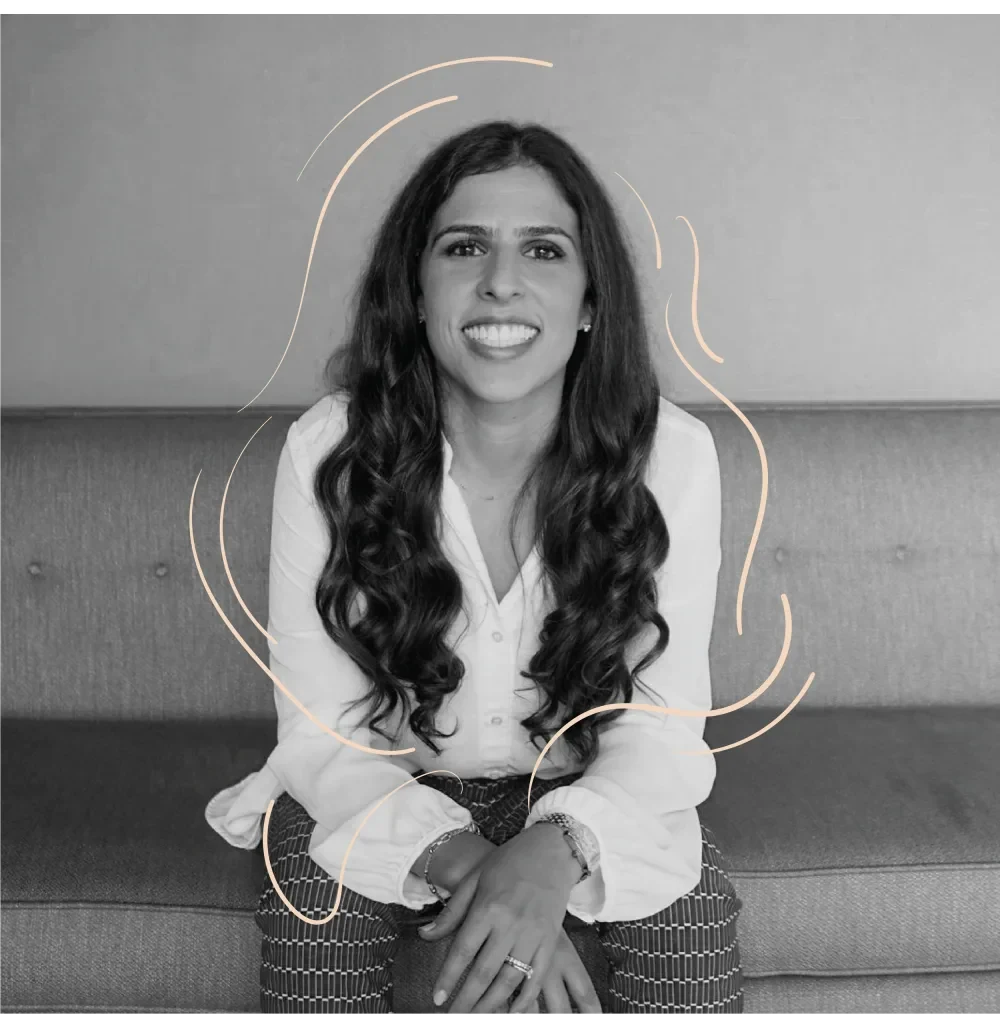

Dr. Rebecca Branda, PsyD, seated on a couch, smiling

Why ADHD and Motherhood Are a Particularly Complex Intersection

Motherhood amplifies everything ADHD makes hard. The mental load. The constant transitions. The emotional demands. The invisible labor of holding everything together.

The work of parenting asks you to hold dozens of competing tasks in working memory simultaneously. To shift your attention fluidly across contexts throughout the day. To manage your emotional responses under chronic sleep deprivation and time pressure. To show up consistently for routines your brain finds deeply unstimulating.

When you are doing all of this with an undiagnosed or under-supported ADHD mind, the failure is not a character flaw. It is a mismatch between the demands of the role and the neurological tools available. ADHD therapy at Birth Feelings addresses both sides of that equation, not by changing who you are, but by helping you understand what you are actually working with.

What ADHD Therapy at Birth Feelings Looks Like

ADHD-focused therapy here is not a skills training course, though practical strategies are part of the work. It is a relational, insight-oriented process that begins with understanding your particular experience: how your mind works, where you feel most stuck, what patterns have followed you across relationships, work, and the everyday demands of parenthood.

From there, the work often moves in two directions at once.

  1. 01

    Making sense of your history

    Many women arrive in therapy having internalized years of messages that they are disorganized, unreliable, or not trying hard enough. A significant part of early work is understanding which of those messages are true and which are stories built around a brain that was misunderstood.

  2. 02

    Identifying your specific ADHD profile

    ADHD is not just one thing. Executive function challenges, emotional dysregulation, rejection sensitivity, sensory overwhelm, and time blindness all show up differently across individuals. Understanding your profile is the foundation for everything else.

  3. 03

    Building sustainable strategies

    Not productivity hacks, but approaches that actually work with your brain rather than demanding you function like someone with a different neurological system.

  4. 04

    Addressing the emotional weight

    Grief for time lost, frustration at the gap between intention and execution, shame carried from childhood: these are common and valid parts of the ADHD experience, and they deserve direct attention in therapy.

  5. 05

    Navigating ADHD in your relationships

    ADHD affects how you show up as a partner, co-parent, friend, and colleague. Understanding the relational dynamics that ADHD creates, and working through them with support, is often where the most meaningful change happens.

The initial session is 60 minutes ($350). All follow-up sessions are 50 minutes ($300), offered weekly. In person in Santa Monica and virtually throughout California. Dr. Branda is out-of-network; a superbill is provided monthly for insurance reimbursement.

Is a Diagnosis Required?

No. Many women who work with Birth Feelings come without a formal ADHD diagnosis, and some never pursue one. What brings them is recognition: a set of patterns, described somewhere, that finally sounds like their experience.

If you have been recently diagnosed and are trying to make sense of what that means for your life, this work can provide that context. If you have always suspected something was different about how your mind operates, that suspicion is a valid starting point. If you have been in therapy before for anxiety or depression and feel like something essential was still being missed, ADHD may be what you have been circling around.

You can begin simply by recognizing yourself in these patterns. The work of understanding and supporting your brain does not require a formal label to get started.

Common questions

Frequently Asked Questions About ADHD Therapy

  • Do I need a formal ADHD diagnosis to start therapy at Birth Feelings?

    No. Many women who work with Birth Feelings come without a formal ADHD diagnosis, and some never pursue one. What brings them is recognition: a set of patterns, described somewhere, that finally sounds like their experience. If you recognize yourself in these patterns, that is a valid place to begin.

  • What is ADHD therapy, and how is it different from regular therapy?

    ADHD therapy is not just about managing symptoms. It is about understanding how your brain works in the context of your life, your identity, and your relationships. At Birth Feelings, the work moves in two directions at once: building practical strategies that actually work with your brain, and addressing the deeper emotional weight that accumulates over a lifetime of feeling misunderstood.

  • Does CBT work for ADHD?

    Yes. Research supports cognitive behavioral therapy adapted for ADHD as an evidence-based approach. It addresses the thought patterns and behavioral cycles that ADHD generates, including perfectionism, procrastination, and all-or-nothing thinking. At Birth Feelings, evidence-based approaches are integrated in a way that is tailored to each woman's history and the specific demands of her life.

  • How does ADHD present differently in women than in men?

    ADHD in women rarely looks like the hyperactive child in a textbook. It often presents as internal restlessness rather than visible movement, high external performance masking a quiet internal struggle, emotional sensitivity, rejection sensitivity, and a chronic sense of being behind no matter how hard you try. Many women are diagnosed late, or not at all, because they have learned to mask effectively over time. This is precisely why Birth Feelings focuses specifically on women's experience of ADHD.

  • Can ADHD get worse during motherhood or after having a baby?

    Yes. Many women first recognize their ADHD in full force after becoming mothers, because the executive function demands of parenting remove the scaffolding that previously kept symptoms manageable. The mental load of tracking schedules, managing transitions, and regulating your own emotions while holding space for a child is relentless work. Hormonal shifts during pregnancy and the postpartum period also interact with ADHD symptoms in ways that can intensify them significantly.

  • Is ADHD therapy available virtually in California?

    Yes. Dr. Branda offers virtual therapy sessions throughout California via telehealth, including Los Angeles, the Bay Area, San Diego, and beyond. In-person sessions are available at the Santa Monica office. If you are unsure which format suits you best, that is a good question to bring to the free 15-minute consultation.

  • How much does ADHD therapy cost in Santa Monica?

    The initial session is 60 minutes and costs $350. All follow-up sessions are 50 minutes at $300 per session. Birth Feelings is out-of-network, meaning sessions are not billed directly to insurance. A superbill is provided at the end of each month, which you can submit to your insurance carrier for possible out-of-network reimbursement.

  • How long does ADHD therapy take to work?

    Most women begin to notice meaningful shifts within 8 to 12 sessions, though this varies based on the complexity of the presenting concerns and what has accumulated over time. Some women pursue longer-term therapy to work through the self-esteem and relational patterns that have built up around a lifetime of unrecognized ADHD. The timeline is something Dr. Branda discusses during the intake conversation, based on where you are starting and what you are hoping to move toward.

  • Can therapy help with ADHD if I do not want to take medication?

    Yes. Therapy is a standalone, evidence-based treatment for ADHD, not only a complement to medication. Many women prefer non-medication approaches, and the work at Birth Feelings is designed to be effective without requiring a medication decision. If questions about medication come up in the course of the work, Dr. Branda can discuss options and, where appropriate, refer you to a prescriber for evaluation.

  • What should I expect in my first ADHD therapy session at Birth Feelings?

    The first session is a conversation. Dr. Branda will spend time understanding what brought you here, how your mind works, where you feel most stuck, and what has shaped your experience over time. You do not need to have everything figured out before you begin. Many women leave the first session feeling seen in a way they have not experienced before, and that is often the most important thing that happens.

Beginning ADHD Therapy at Birth Feelings

Birth Feelings serves women and mothers in Santa Monica, Los Angeles, and throughout California via telehealth. If you are wondering whether ADHD therapy is the right fit, a free 15-minute consultation with Dr. Branda is available to answer your questions and get a sense of whether this work aligns with where you are right now.

You have spent enough time wondering if something is wrong with you. The more useful question, and the one this work begins with, is: what does your brain actually need to function at its best? And what becomes possible when you start from there?

Book a free 15-min consultation

Birth Feelings provides therapy for women navigating ADHD, postpartum mental health, birth trauma, and the challenges of maternal identity. Dr. Rebecca Branda, PsyD, is a licensed clinical psychologist in California. This page is for informational purposes and does not constitute clinical advice. If you are experiencing a mental health emergency, please call or text 988 (Suicide and Crisis Lifeline) or go to your nearest emergency room.

Stay connected. Sign up today!

Reflections on birth, postpartum, ADHD, and the emotional experience of motherhood, delivered every other week.

Subscribe