
The Child You Imagined and the Child in Front of You
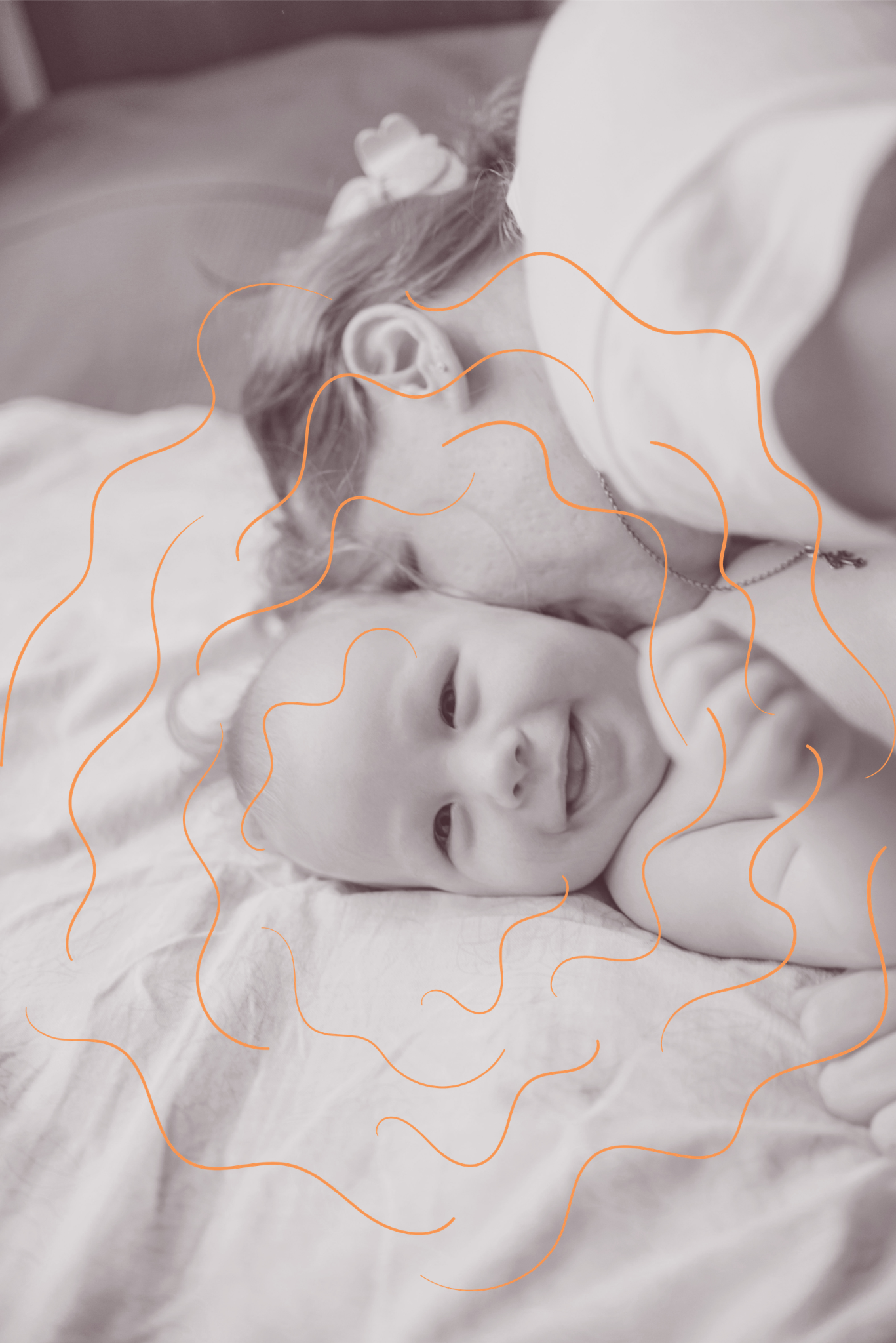
Long before we know our children, we begin imagining them.
Sometimes it begins during pregnancy. Sometimes it begins years before that, in the quiet moments when we wonder what kind of family we might one day have. Without realizing it, we begin collecting small scenes that feel almost like memories from a life we have not yet lived. We picture bedtime stories curled up together on the couch, family vacations where everyone is laughing, birthday parties, first days of school, scraped knees that are quickly soothed with a hug, long conversations in the car when they are teenagers, and eventually watching them grow into adults we genuinely enjoy spending time with.
But we imagine more than moments, we also imagine who they will become.
Not in rigid or demanding ways, rather in a hopeful way people imagine the future when they already love someone they have not yet met.
Perhaps they will be adventurous in all the ways we never quite were. Maybe they will love books because books have always felt like home to us, or move through the world with a confidence we spent years trying to find ourselves.
We picture a child who enjoys school, makes friends easily, and embraces new experiences with curiosity rather than hesitation. Sometimes we imagine a child who resembles us. Other times, almost without noticing, we imagine a child who gets to become the version of ourselves we never had the chance to be.
Most of these hopes run in the background of our minds. We hardly recognize them as expectations at all. They become part of the story we begin telling ourselves about our future family, woven into our excitement and into the ordinary hope that our children will find happiness in the world.
Then, little by little, our child begins introducing themselves. Not the child we imagined. The child who is actually here.
Perhaps they laugh harder than everyone else, cry longer than everyone else, and seem to experience every emotion with remarkable intensity. One loves books and avoids sports entirely. Another cannot imagine sitting still long enough to finish a chapter because there is simply too much to explore outside.
None of these qualities are flaws, they are simply the beginning of who this particular child is. And then we begin to realize that the child we imagined and the child in front of us are no longer, and will never be, the same person.
The Stories We Started Writing
Most parents never say this out loud, not because of a lack of love, rather that it feels like admitting a disappointment that is out of our control which we often feel looks like a lack of love.
Loving our children completely can exist alongside the quiet grief of letting go of the child we thought we knew before they ever had the chance to become themselves.
That grief is rarely about wishing for a different child, it is about seeing a different future.
A mother whose child refuses camp is not grieving camp itself. She may be grieving the ease she imagined her child would move through the world. A father whose son has no interest in baseball is usually not grieving the game. More often, he is grieving a relationship he quietly pictured the two of them sharing, perhaps because it looked different from the one he had with his own father.
The stories we carry are rarely dramatic. Most of the time, they are wonderfully ordinary.
I thought she would enjoy performing.
I thought he would feel confident.
I thought she would be okay.
Parents often feel guilty for having thoughts like these. They worry that acknowledging them somehow means they have failed to accept their child for who they are. I usually find the opposite to be true. Mothers who allow themselves to mourn the stories they expected leave space for the new stories being created.
Every child arrives carrying something that belongs only to them. Before they ever tell us what they love, what frightens them, or what makes them feel most alive, they already possess a temperament, a nervous system, and a particular way of experiencing the world that is uniquely theirs.
As parents, we influence our children in countless meaningful ways. Our love, safety and willingness to repair after difficult moments matters. Every relationship our children experience inside our homes becomes part of the foundation they carry into the rest of their lives.
Influence is different from authorship.
Children are not blank pages. They arrive already carrying the first chapter of their story, and we have the privilege of discovering who that person is and will become. However, one of the surprises of motherhood is when we realize that we can guide, protect, teach, and support our children, but our work is to actually meet our children exactly where they are. Not where we want them to be.
The toddler who refuses to leave your side may become the teenager who fiercely protects her independence. The child who startles easily may grow into the adult whose sensitivity allows other people to feel deeply understood. The boy who seems impossibly energetic may become someone whose curiosity and enthusiasm carry him into places you never could have imagined.
Children keep unfolding. Each new stage demands that we listen and watch like never before navigating the paradox of feeling completely out of control, yet deeply supported and guided.
When Love Begins Looking for Certainty
That can be surprisingly difficult, because somewhere beneath our hopes for our children is another hope we are often less aware of.
We want to know that they will be okay. Oftentimes it is safe in a way we did not feel as a child.
We want to believe that if we love them deeply enough, pay close enough attention, and make thoughtful enough decisions, we can somehow protect them from the disappointments that shaped us. We tell ourselves this in small ways without even realizing it.
Maybe if I choose the right school, or responded calmly every time, or noticed their feelings sooner, then they won't have to struggle the way I did.
They come from the deep and very human wish to spare our children pain whenever we can.
For many mothers, especially those whose entrance into motherhood was marked by a difficult birth or a traumatic postpartum experience, that wish can become even stronger.
Birth has a way of teaching us, often much sooner than we expected, that there are things we cannot control, no matter how carefully we prepare or how deeply we love our babies.
Sometimes motherhood begins with the heartbreaking realization that love does not guarantee the story we hoped to tell.
Without realizing it, many mothers spend the years that follow trying to regain that sense of certainty.
If I cannot control how my child entered the world, perhaps I can control what happens from here.
If I make the right decisions, or stay patient enough or learn enough. Perhaps I can protect my child from struggling. And perhaps I can protect myself from ever feeling that helpless again.
These longings are heavy. Because children continue teaching us the very lesson birth first introduced. They are people we love. Not people we control.
And perhaps that is where the real work of motherhood begins, not in learning how to shape our children into who we imagined they would become, but in slowly discovering who they have been all along, even as we learn to loosen our grip on the stories we once believed would keep both of us safe.
Curiosity Instead of Certainty
If there is one lesson children seem to teach us over and over again, it is that they cannot be understood all at once.
Just when we think we know who they are, they surprise us.
The toddler who clung to your leg at every birthday party becomes the child who confidently walks into kindergarten without looking back. The little boy who never stopped moving discovers a love of drawing that keeps him quietly absorbed for hours. The child who struggled to separate from you at preschool becomes the teenager whose independence arrives almost overnight.
Children have a way of transitioning and changing right when you think you understand them.
Perhaps that is why certainty can become such a difficult place to parent from.
Certainty tells us we already know what this behavior means. It convinces us that today's struggle predicts tomorrow's future, or that one difficult season somehow defines who our child is becoming. When we are frightened, certainty often sounds reassuring because it promises answers.
Curiosity offers something different, it stops us from rushing into a conclusion.
Instead of asking why our child refuses camp, curiosity wonders what camp feels like inside this particular child's body. Instead of assuming a child who melts down over small disappointments is too sensitive, curiosity asks what they may be experiencing that we cannot yet see. Rather than treating every challenge as something to solve immediately, it creates space to understand the child before deciding what they need.
To be clear this does not mean we stop guiding our children. Children need boundaries, the containment is safe and supportive. They need adults who help them tolerate frustration, develop confidence, and slowly do hard things.
But guidance begins to look different when it grows from understanding instead of fear.
The question quietly changes from, "How do I make my child different?" to "What does this child need from me because of who they are?"
That is a very different kind of parenting.
The Child Is Not the Problem to Solve
I sometimes wonder if mothers carry a unique burden because we are so often taught that our children's experiences reflect our success or failure.
When a child struggles socially, we wonder what we missed. If they feel anxious, we search our own behavior for an explanation. And when they are intense emotionally, we worry that our own emotions somehow became theirs.
Of course our relationship matters, it is the primary relationship that shapes the course for all future relationships for your child.
Children are shaped by the homes they grow up in and by the people who care for them. But there is a difference between influence and responsibility.
There is also a difference between responsibility and ownership. Our children are allowed to have struggles that do not mean we have failed them. They are allowed to be cautious without us believing we created fear. They are allowed to be deeply sensitive without us assuming we somehow made them fragile.
They are allowed to be different from us. That realization can feel freeing, reminding us that parenting has always been a relationship between two people.
Becoming the Student of Your Child
I often think we miss how much is learned over time without us even knowing it. In the beginning, we spend so much energy trying to teach our children. We teach them words, routine, kindness and patience.
Over time, however, we should be working towards becoming a student of our children, to continue to learn alongside them.
We learn which situations overwhelm them and which ones help them feel alive. We begin recognizing the subtle differences between tiredness and anxiety, stubbornness and fear, excitement and overstimulation. We notice that one child needs encouragement before trying something difficult, while another needs space to figure it out alone.
The more carefully we watch, the more we discover that what works beautifully for one child may not work at all for another.
Parenting slowly becomes less about following a formula and more about paying attention.
Perhaps that is why curiosity is so powerful.
It asks us to keep learning.
It reminds us that our children are not mysteries to solve but people to know, and knowing another person is work that is never really finished.
Even after years together, they continue surprising us. Thankfully, they do.
The Privilege of Discovery
Perhaps one of motherhood's greatest gifts is not knowing.
When our children are born, we often imagine that our job is to teach them who they are. We spend years helping them find words, navigate friendships, recover from disappointment, and slowly make sense of the world around them. Yet somewhere along the way, without quite realizing it, our role begins to change.
We become students too.
Our children keep introducing themselves to us.
The cautious toddler becomes the teenager who quietly stands up for someone else. The child who seemed endlessly energetic discovers a love for music, art, or science that no one could have predicted. The little girl who clung to your leg at preschool grows into a woman confident enough to move across the country for a life she built herself.
And as we watch them becoming themselves, something unexpected often happens. We begin becoming more ourselves too.
Sometimes our children introduce us to parts of ourselves we thought had disappeared, the woman who still loves to dance in the kitchen, who laughs more freely than she has in years, who discovers new patience, new courage, or even entirely new dreams because this child invited them back into her life.
Perhaps that is why motherhood changes us so profoundly, growing alongside another person.
Perhaps the deepest work of motherhood is not shaping our children into who we hoped they would become. Perhaps it is loving them enough to keep discovering who they already are.
And perhaps somewhere in that lifelong act of discovery we find more and more of ourselves too.
And remember, always, you are strong as a mother.