
The Childhood We're Trying to Give Our Children
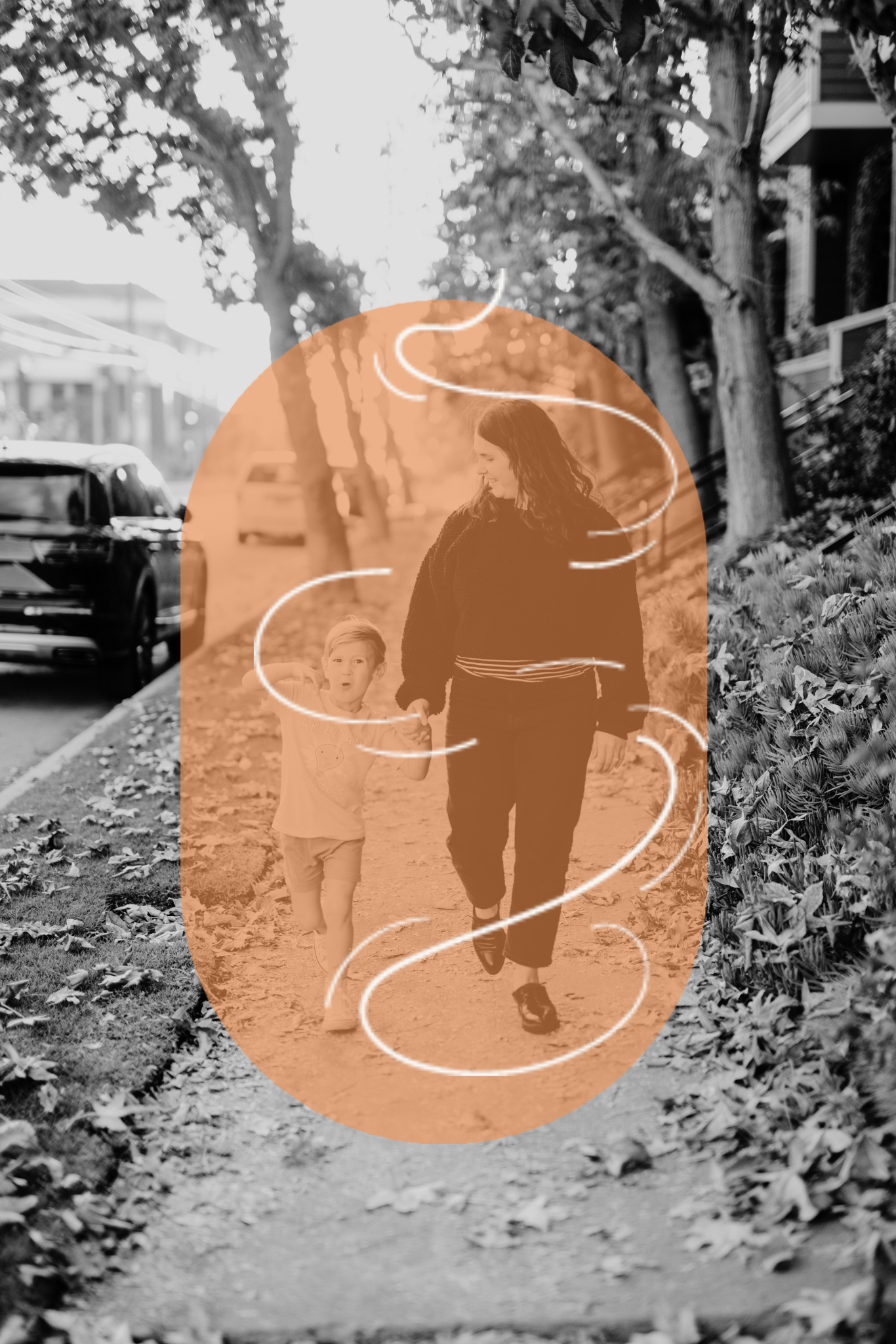
As the holiday season approaches, many of us begin thinking about the traditions we want to maintain, the family gatherings we need to plan, and all the experiences we hope our children will remember. There's a lot of excitement around this time of year, but also an enormous amount of pressure to make it special.
Some of us are trying to recreate the holidays we loved growing up, while others are determined to give their children the experiences they never had. We might even find ourselves working particularly hard to create a family environment that looks nothing like the one we grew up in.
Of course, there is a lot of love behind these efforts. We want our children to feel happy, connected, and secure, and we hope they will someday look back on their childhoods with warmth. But I think it's worth considering how much of what we're creating is based on our children's needs and how much is influenced by our own childhood experiences.
Are we creating the childhood our children need, or the childhood we want them to have? And how often do we recognize the difference?
The Childhood We Bring Into Parenting
We all bring our childhood experiences, relationships, disappointments, and expectations into the families we create. Some of these influences are obvious to us. We may know that we want to recreate Sunday dinners at our grandparents' house or that we're determined to avoid the arguments that filled our childhood homes. But many of these influences operate outside of our awareness.
Our early relationships shape the expectations we carry into later relationships, including those with our children. We develop ideas about what love looks like, what makes someone a good parent, and what a happy childhood should feel like.
In my work, I see mothers who are trying to live up to the standards their own parents established, as well as mothers who are working very hard not to become their parents. Often, both are happening at the same time.
A mother who grew up with elaborate family traditions may feel strongly about recreating those experiences because they were meaningful to her. Another mother who grew up without those traditions may feel just as strongly about providing them because she remembers what it felt like to miss out.
Although the experiences are different, both mothers may feel a similar pressure to get it right. What can be harder to recognize is that their children may not experience these moments in the same way they did, or in the way they hoped they would.
When Our Childhood Joy Becomes Their Expectation
I love skiing, and naturally, I want my children to love it too. It's something that has brought me tremendous joy, and I have always imagined it being an important part of our family life.
When my older son was two, I was determined to get him comfortable on skis from a young age. One day, while it was snowing heavily, I had him on his skis between my legs and was walking him up and down a small hill to help him get used to the feeling. He started crying and telling me he wanted to stop, but my immediate instinct was to encourage him to keep going. I was so focused on wanting him to love skiing and become good at it that I convinced myself getting comfortable in challenging conditions was simply part of the process.
But then I caught myself. Was I really thinking about what was best for him, or was I thinking about how much I wanted him to enjoy something that I loved?
Here was my two-year-old son, clearly telling me that he was overwhelmed and ready to go inside, while I was trying to convince him that he should be having a wonderful time.
I realized that if I wanted him to develop his own relationship with skiing, I needed to give him room to do that. Maybe he would love the sport as much as I do, or maybe what he would enjoy most was being in the mountains with his family, playing in the snow, and taking breaks for hot chocolate. All of those experiences could be meaningful, even if they looked different from what I had imagined.
This experience has stayed with me because it reminded me how easily our own joy can become an expectation we place on our children. We want to share something wonderful with them, but sometimes we become so invested in the experience that we stop paying attention to whether they're actually enjoying it.
When Our Own Childhood Pain Gets Activated
This happens with difficult childhood experiences as well, although the emotional response can be much more intense.
Think about a mother who struggled socially as a child. Perhaps she remembers feeling excluded from friendships or being the only child who wasn't invited to a birthday party. Years later, when her own child comes home upset about not being included, she may experience a much stronger emotional reaction than she anticipated.
Part of her response is, of course, concern for her child. But her own childhood feelings of rejection may also be coming into the room.
For some mothers, this can activate responses that resemble or are trauma responses (fight, flight, freeze or fawn). One mother might immediately want to confront the other parents or fix the situation. Another might become overwhelmed and avoid addressing it altogether, while someone else might work excessively hard to make sure everyone is happy and nobody feels rejected.
These reactions aren't always conscious, and they don't necessarily mean a parent has unresolved trauma. There are certainly situations where a strong reaction is warranted. But it can be useful to consider whether the intensity of our response is coming entirely from what our child is experiencing or whether our own history is influencing how we understand the situation.
If we are responding to our own childhood pain alongside our child's, we can unintentionally take over their experience. Instead of asking them what happened, how they feel, and what they need, we may become focused on making sure they never feel the way we once did.
The intention is protective, but our children still need room to understand their own experiences and develop their own ways of navigating difficult situations.
When Parenting Becomes Another Performance
I also think contemporary parenting culture makes this considerably harder. There is so much information about how to raise emotionally healthy children that sometimes I feel we spend more time reading about parenting than actually paying attention to our children.
We're constantly learning about attachment, emotional regulation, boundaries, resilience, and the importance of validating feelings. Much of this information is valuable, and I certainly believe that understanding child development can make us better parents.
But I also wonder whether our constant focus on doing things correctly sometimes gets in the way of simply being present.
We become preoccupied with whether we're saying the right thing, setting the right boundary, or responding appropriately to every emotional moment. And when we add the pressure of creating magical holidays, meaningful family traditions, and memorable childhood experiences, parenting can start to feel like another area of life where we're being evaluated.
What gets lost in all of this is the actual child standing in front of us.
We can plan an elaborate family outing, only to discover that our child is tired and would rather stay home. We might spend weeks preparing a birthday celebration and feel disappointed when our child seems more interested in playing with the wrapping paper than appreciating what we've organized.
Of course, these moments can be frustrating, especially when we've invested so much time and energy. But a child who doesn't enjoy something we carefully planned isn't necessarily rejecting us or the love behind it. They may simply be having an experience that differs from what we imagined.
And that is something we need to make room for.
Learning to See the Child in Front of Us
I don't think the answer is to separate ourselves entirely from our childhood experiences. Our histories are an important part of who we are, and they influence what we value, what we want to share, and how we understand relationships.
The goal is to become more aware of these influences so that we can recognize when our own expectations are shaping how we respond to our children.
Sometimes our reactions to our children surprise us. We might find ourselves becoming unusually upset, frustrated, or invested in something that, on the surface, doesn't seem all that significant. Those moments are worth paying attention to because they can tell us something about our own experiences and expectations, and how those might be influencing the way we respond to our children.
When that happens, I think it's helpful to pause and consider a few questions:
Is this feeling about my child, or is some part of it about me?
Am I really listening to what my child is telling me, or am I interpreting their experience through the lens of my own childhood?
Can I tolerate my child having a different experience than the one I hoped they would have?
We will never be able to approach parenting without our own biases, histories, and emotional experiences. But we can become more thoughtful about how those influences show up.
When I think back to that day on the ski hill with my son, I don't regret wanting to share something I love with him. I still hope skiing becomes something we enjoy together. What mattered was recognizing that his experience was separate from mine, and that I needed to listen to what he was telling me rather than continuing to push for the experience I had imagined.
Giving Our Children Room to Have Their Own Childhood
As we move into the holiday season, I think there is something freeing about remembering that our children don't need us to create a perfect childhood. They need us to be interested in the childhood they are actually having.
We can still create traditions, plan family experiences, and share the things that brought us joy growing up. We can also work to change the patterns from our childhoods that we don't want to repeat. But doing these things well requires us to remain curious about who our children are, rather than assuming they will experience the world as we did.
Sometimes the most meaningful moments aren't the ones we planned, and sometimes the experiences we remember most fondly won't carry the same meaning for our children. That can be disappointing, particularly when we've invested so much of ourselves in trying to give them something special.
But perhaps part of parenting is learning to tolerate that disappointment without making it our children's responsibility.
We can give them our traditions, our experiences, and our love, while still leaving room for them to discover what matters to them.
After all, we're not simply trying to recreate the childhood we loved or repair the one we wish we'd had. We're raising children who deserve the opportunity to experience a childhood of their own.
Remember always – you are strong as a mother.