Why Everything Feels So Loud After Kids
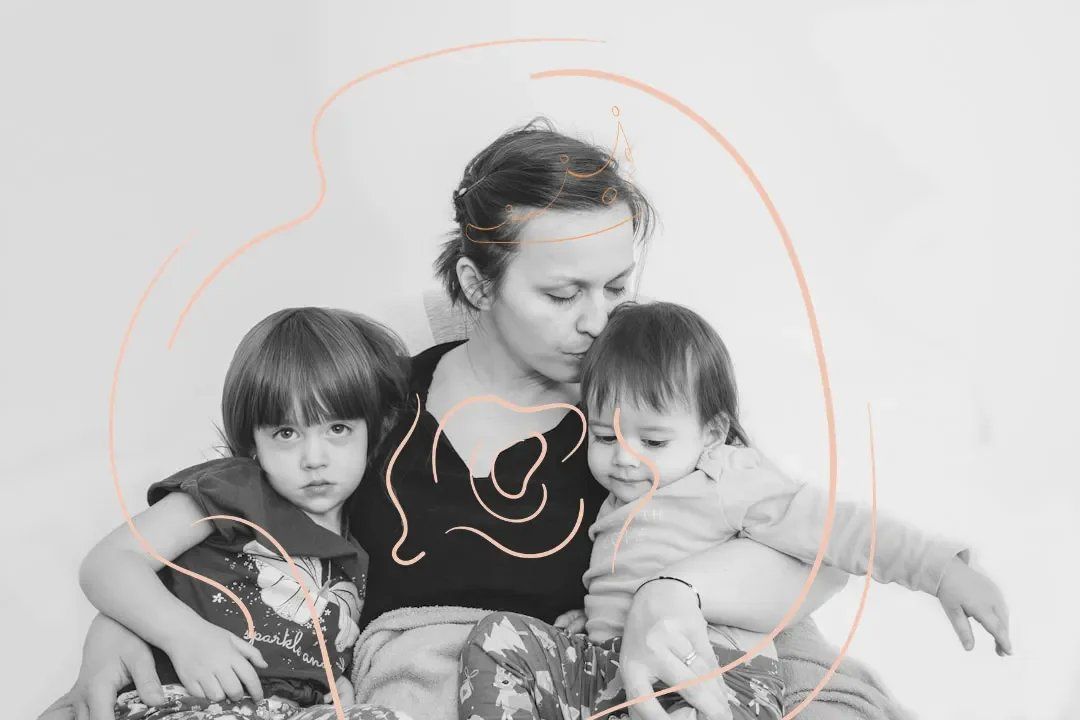
Sometimes motherhood does not feel hard in one big dramatic moment. Sometimes it feels hard because by 6:32am someone is whining, someone is yelling from another room, someone is touching you while asking a question, and your nervous system already feels completely full before you have even had your first cup of coffee.
Most mornings in my house begin before I am fully awake.
I come downstairs still in my pajamas because apparently everyone needs me “immediately.” My youngest is standing at the refrigerator yelling and pointing, frustrated that he cannot fully explain what he wants or reach it himself. My oldest is asking for help building magna-tiles while simultaneously insisting he is not hungry. Then suddenly, the moment his brother starts eating, he cannot believe I did not somehow already know that he too wanted cereal and milk.
Except the cereal is wrong. Or the bowl is wrong. Or the spoon is wrong. Or now, suddenly, after all of that, he actually wanted a bagel.
And somewhere in the middle of all of this, I can feel myself internally start to break a little. Not because anyone is doing anything terrible, but because everything feels so loud.
Loud Does Not Only Mean Noise
I think when many mothers say everything feels louder after kids, we are not only talking about literal sound.
Although sometimes it is literal sound. From the whining, to the talking over each other, to the talking toys, to the TV (that you have repeatedly asked them to turn off). The constant interruptions before your brain has even completed its first thought.
But I also think loudness becomes emotional after motherhood.
The mental tabs that never close and the constant monitoring. The attempt to anticipate everyone’s needs before they ask. And the inability to ever fully relax because some part of your brain is always scanning for what comes next and feeling guilty if it stops.
And after enough time, many mothers stop realizing how overstimulated they actually are because it becomes the background noise of daily life.
Especially for mothers who are already highly sensitive, anxious, carrying trauma histories, or navigating ADHD.
Motherhood Changes the Nervous System
I do not think mothers fully power down anymore. Even when the house is quiet, part of your body is still listening. For the sounds of your children, through their coughs, footsteps, texts from school, or things you forgot to sign.
Motherhood creates a kind of constant attunement that is beautiful and exhausting all at once. And I think this is part of why many mothers become so protective of their small moments alone.
At night, after my children finally go to sleep, I usually finish work, tidy up the house, and then for a little while I completely zone out into television. Not because I do not love my life, but because it feels like the only moment all day where nobody needs something from me emotionally.
It is the closest thing I have to fully exhaling. And honestly, when bedtime gets delayed or one of my children struggles to settle, I can feel how intensely I react internally because I realize how much my nervous system was depending on that small pocket of quiet to recover. I do not think enough mothers talk about that.

Why It Can Feel Even More Intense for ADHD and Highly Sensitive Mothers
For mothers with ADHD, the overstimulation can feel relentless. There are too many inputs happening at once, too many emotional demands, and too many unfinished tasks being held mentally at the same time.
And unlike the stereotype many people imagine, ADHD in motherhood does not always look chaotic externally. Often it looks like a woman trying desperately to hold everything together while internally feeling flooded by noise, needs, transitions, and emotional demands that never stop coming.
Highly sensitive mothers often experience this differently but just as intensely.
Sometimes the overstimulation feels almost physical. Noise feels sharper, whining feels unbearable and constant touching can start to feel painful instead of connecting.
And many highly sensitive women also struggle deeply with guilt around these reactions because they desperately want to stay emotionally available and patient for their children.
Especially mothers who experience rejection sensitivity. A child saying “you’re mean” or “you never play with me” can land emotionally with enormous intensity, leading mothers to override their own needs constantly in an attempt to stay connected, loving, and enough.
But eventually, a nervous system that never gets recovery starts protesting. Not because you are a bad mother, rather because you are overloaded.
I Think Many Mothers Quietly Grieve Who They Were Before
There is grief in this too. Not grief about loving our children, but grief around parts of ourselves that felt different before motherhood. Often women will say, they miss the version of themselves they knew before motherhood. They saw themselves as women who weren’t reactive, weren’t overstimulated and felt less frustrated by small things.
I think many mothers quietly carry this feeling while simultaneously feeling guilty for having it.
There can also be grief around realizing you cannot fully do it all alone. You cannot always be the endlessly patient mother, and the emotionally available partner, while also being the successful professional who is organized and has a calm nervous system. The perfect version of yourself all at once. And modern motherhood makes this even harder.
Modern Parenting Is Intensely Stimulating
I think parenting culture today asks for an extraordinary amount from mothers emotionally.
Children are rarely just told to “go play” anymore. We are expected to engage constantly, stimulate constantly, enrich constantly, emotionally attune constantly.
There is pressure to optimize everything: their learning, emotions, social development, nutrition, screen time, and entire future. And so much of it falls onto mothers mentally.
At the same time, many families have far less communal support than previous generations. Less neighborhood parenting, less shared childcare, and less natural relief built into daily life.
Recently, a friend picked up both of our children and took them to tennis together for a carpool arrangement. I cannot even explain how emotional that felt to me afterward. I felt lighter. More human. More supported. Like my nervous system had suddenly been given room to breathe for a second.
And what struck me afterward was how abnormal that level of support has started to feel. We were never supposed to do all of this alone.
What Actually Helps
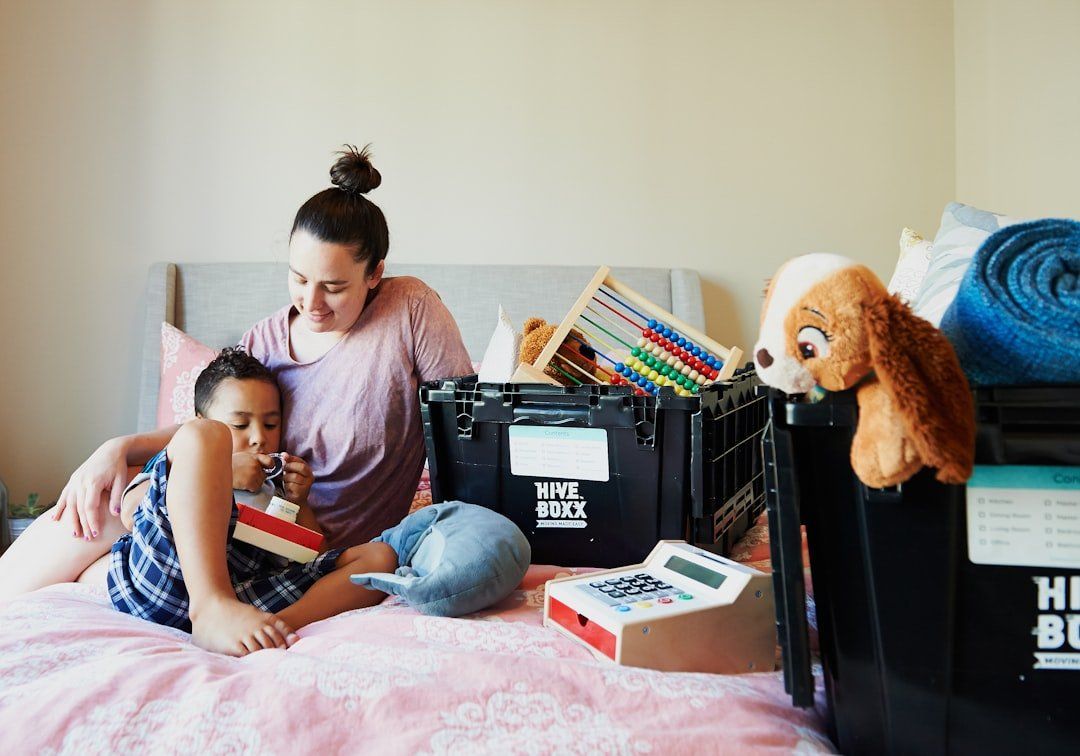
Not becoming better at tolerating overstimulation and not becoming a more efficient mother. Honestly, I think what helps many mothers most is asking for less. Asking for less input, accessibility, pressure, and mainly less constant emotional availability every second of the day.
Mothers need to stop more. They need more quiet time, more pauses, more moments where nobody is touching you or asking something from you. And more opportunities for your nervous system to exist without performing.
And I know this can bring guilt, shame, fear. Because asking for more support or more space can feel like asking for “less parenting,” but I actually think the opposite is often true.
When mothers have room to recover, they usually feel more patient, more connected, more emotionally available, and more like themselves again. What mothers need most is not help accomplishing more, it is simply needing permission to power down for a little while without feeling guilty for it.
Remember, always, you are strong as a mother.